Introducing the HST-CAA001 DIY Class A Amplifier PCB
For John Laurence Linsley-Hood's Classic Circuit Design
To purchase, please visit our Ebay shop HERE
Free download of the full, 32 page project guide, including Bill of Materials can be found HERE
"John Laurence Linsley-Hood's Class A amplifier design, which first appeared in the April 1969 edition of 'Wireless World' magazine, has become somewhat legendary amongst DIY audio enthusiasts. I first came across this circuit when I was an obsessive'Audiophile' teenager, far too many years ago than I would like to admit, and I was blown away by the clarity of the sound it produced.
The quality of the sound reproduced by Hi-Fi audio equipment can be highly subjective, but when constructed correctly and paired with a suitable power supply, I think this circuit provides an amazing listening experience. And, the low component count means you get all of this at a fraction of the price of similar quality Hi-Fi power amplifiers available on the market today, even ones considered 'Audiophile' or 'Reference'.
My early builds of the circuit involved either stripboard or hand-drawn, home etched PCBs, as these were the only real options to an audio DIYer at the time. In more recent times I decided to revisit the design and build a much more up to date take on the circuit, using computer aided design and a professionally made PCB. This was initially just a personal project, but as I'm really happy with the results, it made sense to make more batches of the PCB so that others can have a neat and practical way to construct a modern, stereo version of this amazing circuit.
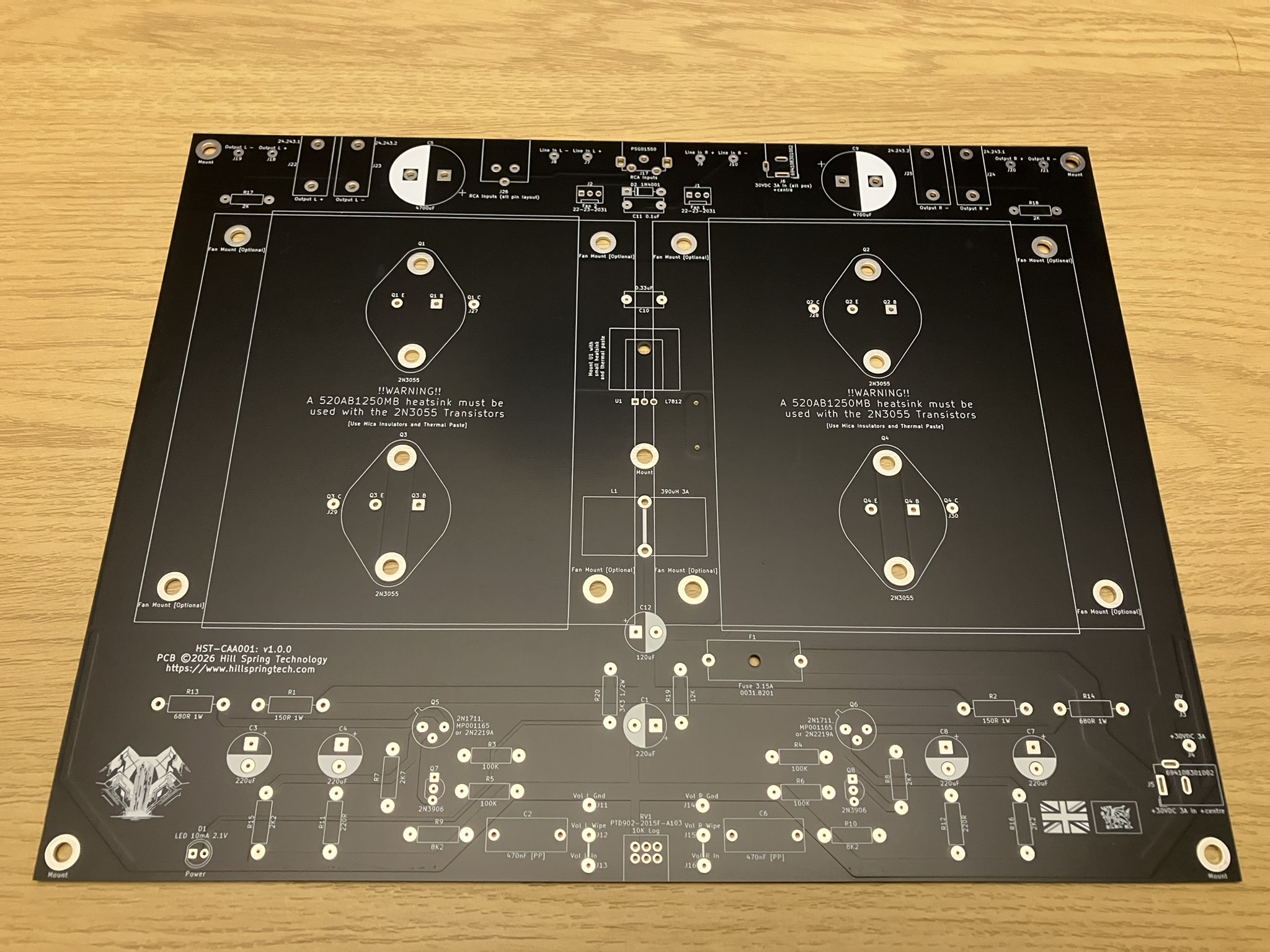
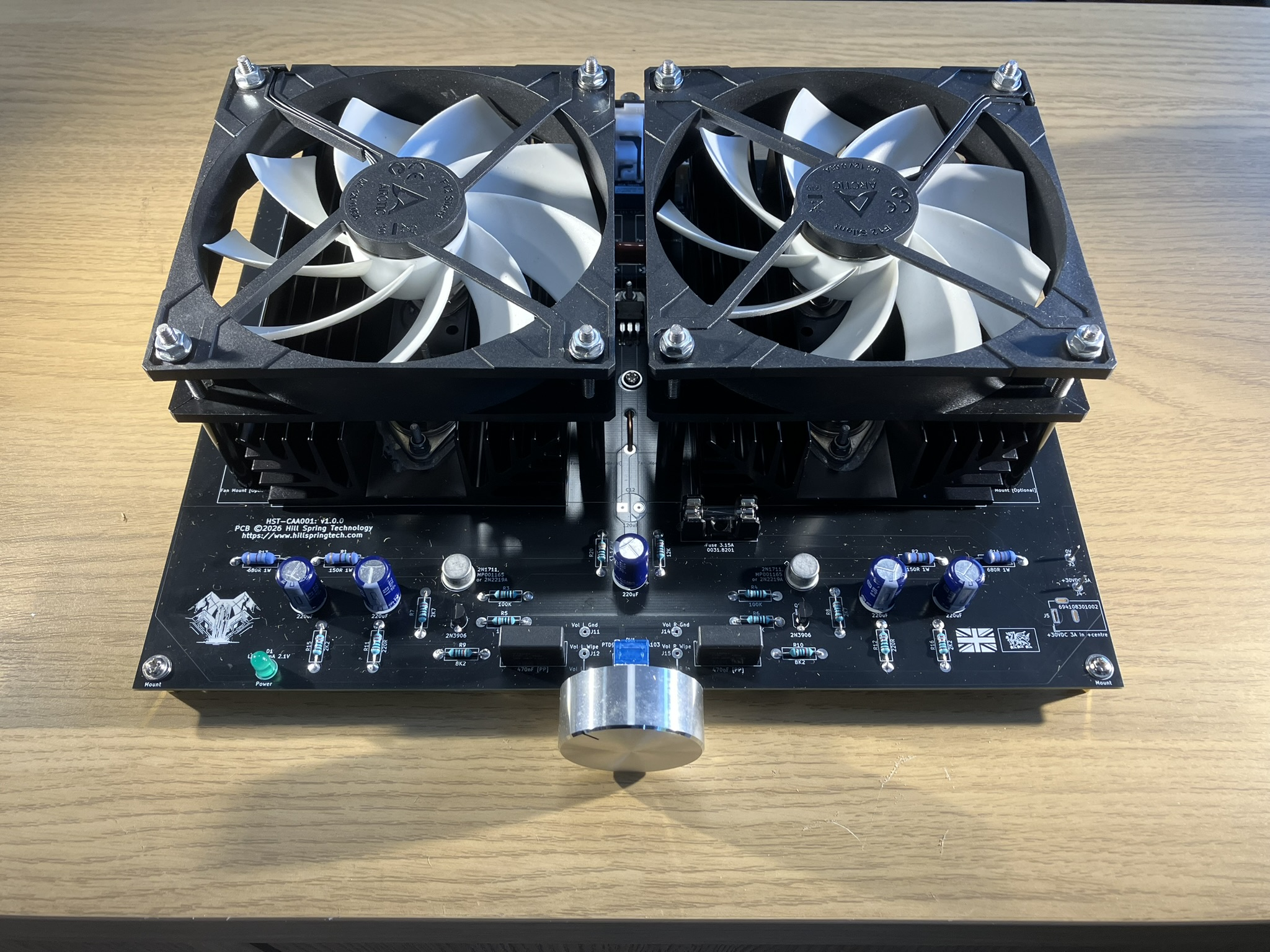
The PCB has been carefully designed to make the amplifier easy to construct, using components that are both through-hole only, and readily available to electronics hobbyists in 2026. There are no fiddly surface mount components to deal with, and no hunting the dark corners of the web for anything rare, exotic or discontinued.
The PCB design has also added flexibility to the circuit, with provision for mounting components in different ways to suit requirements. It also adds optional active cooling and power supply noise suppression." - Bill (Hill Spring Technology)
©2026 Hill Spring Technology